PALESTINE-ISRAEL CRISIS
LIVE STATS
GAZA
Killed
0
- As per Lancet, till June 2024, 186,000
- 286 Journalists killed in Israeli attacks
- 180 children among 453 people died in starvation
Wounded
0
West Bank and East Jerusalem
Killed
0
Wounded
0
Israel
Killed
0
769 civilians, 307 soldiers, 57 police officers
Wounded
0
Lebanon
Killed
0
Wounded
0
Israel's Genocide in Gaza : LIVE UPDATES
Israeli official rejects proposal for arms “freeze,” says demilitarization is non-negotiable under US-proposed Gaza plan
DOHA/GAZA CITY (MNTV) — Israel said that Hamas “will be disarmed” under the terms of the US-sponsored peace plan for Gaza, firmly dismissing a proposal by the group’s senior leadership to temporarily store or freeze its weapons rather than surrender them.
An Israeli official told AFP that “there will be no future for Hamas under the 20-point plan,” emphasizing that the organization will be fully demilitarized as part of the ongoing ceasefire framework.
The statement followed remarks by Khaled Meshaal, a top Hamas leader, who told Al Jazeera that the group is willing to consider a weapons “freeze” as a confidence-building measure but rejects outright disarmament.
He described the idea of total surrender of arms as “unacceptable to the resistance,” adding that the freeze could serve as a safeguard “against any military attacks from the Israeli occupation.”
The comments come amid a fragile ceasefire that has held since October 10 under a US-brokered agreement aimed at ending the devastating genocide of Palestinians by Israel.
The deal is structured in three phases, with Israeli Prime Minister Benjamin Netanyahu recently signaling that it may soon move to the second phase.
Under that next stage, Israeli troops would pull back further from Gaza and an International Stabilization Force would assume control of security zones, while Hamas would lay down its weapons — a step Hamas says it cannot accept.
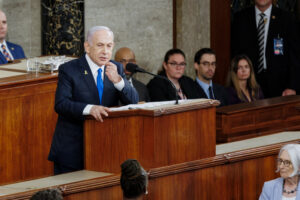
Netanyahu is expected to meet US President Donald Trump later this month to discuss implementation of the truce, including the disarmament clause.
Meshaal said disarmament would be viewed by Palestinians as “stripping away the very soul” of the resistance, though he expressed hope that “pragmatic American thinking” could allow for a compromise centered on weapons storage rather than removal.
During the agreement’s first phase, Palestinian militants released the remaining 48 living and deceased hostages, while Israel freed nearly 2,000 Palestinian detainees and returned hundreds of bodies.
However, almost daily airstrikes and drone strikes by Israel on various positions inside Gaza have shattered hopes for a perpetual peace in Gaza.
Meshaal also said Hamas is open to the deployment of international forces along Gaza’s border with Israel — similar to the UN peacekeeping mission in southern Lebanon — but categorically rejects any foreign military presence inside Gaza, calling it tantamount to “occupation.”
He argued that regional states and mediators could act as guarantors against escalation from Gaza, asserting that “the danger comes from the Zionist entity, not from Gaza.”
Israeli official rejects proposal for arms “freeze,” says demilitarization is non-negotiable under US-proposed Gaza plan
DOHA/GAZA CITY (MNTV) — Israel said that Hamas “will be disarmed” under the terms of the US-sponsored peace plan for Gaza, firmly dismissing a proposal by the group’s senior leadership to temporarily store or freeze its weapons rather than surrender them.
An Israeli official told AFP that “there will be no future for Hamas under the 20-point plan,” emphasizing that the organization will be fully demilitarized as part of the ongoing ceasefire framework.
The statement followed remarks by Khaled Meshaal, a top Hamas leader, who told Al Jazeera that the group is willing to consider a weapons “freeze” as a confidence-building measure but rejects outright disarmament.
He described the idea of total surrender of arms as “unacceptable to the resistance,” adding that the freeze could serve as a safeguard “against any military attacks from the Israeli occupation.”
The comments come amid a fragile ceasefire that has held since October 10 under a US-brokered agreement aimed at ending the devastating genocide of Palestinians by Israel.
The deal is structured in three phases, with Israeli Prime Minister Benjamin Netanyahu recently signaling that it may soon move to the second phase.
Under that next stage, Israeli troops would pull back further from Gaza and an International Stabilization Force would assume control of security zones, while Hamas would lay down its weapons — a step Hamas says it cannot accept.
Netanyahu is expected to meet US President Donald Trump later this month to discuss implementation of the truce, including the disarmament clause.
Meshaal said disarmament would be viewed by Palestinians as “stripping away the very soul” of the resistance, though he expressed hope that “pragmatic American thinking” could allow for a compromise centered on weapons storage rather than removal.
During the agreement’s first phase, Palestinian militants released the remaining 48 living and deceased hostages, while Israel freed nearly 2,000 Palestinian detainees and returned hundreds of bodies.
However, almost daily airstrikes and drone strikes by Israel on various positions inside Gaza have shattered hopes for a perpetual peace in Gaza.
Meshaal also said Hamas is open to the deployment of international forces along Gaza’s border with Israel — similar to the UN peacekeeping mission in southern Lebanon — but categorically rejects any foreign military presence inside Gaza, calling it tantamount to “occupation.”
He argued that regional states and mediators could act as guarantors against escalation from Gaza, asserting that “the danger comes from the Zionist entity, not from Gaza.”
UNICEF Communications Manager Tess Ingram said the number of underweight babies in Gaza has risen sharply in 2025
GENEVA, Switzerland (MNTV) – UNICEF Communications Manager Tess Ingram said the number of underweight babies in Gaza has risen sharply in 2025, with 10% of all births — around 300 babies a month — affected in the first half of the year.
The trend reflects a worsening cycle of maternal and infant malnutrition amid Israel’s ongoing blockade and destruction.
Ingram said the pattern shows “malnourished mothers giving birth to underweight or premature babies who die in Gaza’s neonatal units or survive only to face malnutrition or lifelong medical complications.”
Before the war, an average of 250 babies (5%) a month were born underweight in 2022, according to Gaza’s Health Ministry. But from July to September this year, the figure surged to about 460 babies per month — nearly double the pre-war average.
Amid destroyed hospitals, displaced medical staff and severe supply shortages, the number of babies dying on their first day of life increased 75% compared with 2022 — rising from 27 to 47 per month between July and September.
Ingram said 38% of screened pregnant women during that period were diagnosed with acute malnutrition. UNICEF admitted 8,300 pregnant and breastfeeding women for treatment in October alone.
“This domino effect — from mother to child — should have been prevented,” she said, noting that much of the suffering “could have been avoided if international humanitarian law had been respected.”
She urged increased aid flows into Gaza, particularly supplies supporting maternal health and hospital capacity.
Thousands of children continue to suffer from famine-level conditions as aid shortfalls persist even after October ceasefire
GAZA, Palestine (MNTV) — UNICEF warned that Gaza remains gripped by severe famine in children, with thousands of cases recorded in the weeks following the October ceasefire that was intended to accelerate humanitarian relief.
According to the agency, 9,300 children were treated for severe acute malnutrition in October — a sharp figure that, while lower than the record 14,000 cases reported in August, remains far above the levels documented during the February–March truce period.
UNICEF spokesperson Tess Ingram, told Arab News via video link from Gaza that the current caseload shows that aid flows still fall well short of actual needs.
She described encountering critically underweight newborns, some weighing less than a kilogram, “their tiny chests straining just to stay alive,” underscoring the gravity of the crisis.
Ingram said UNICEF is now able to move more humanitarian supplies into Gaza than before the October 10 agreement, yet bottlenecks persist due to repeated closures of aid passages by Israel.
Delays at crossings, the rejection of aid cargoes, periodic route closures, and continued security risks by Israel, which perpetrated the genocide in Gaza, all restrict the volume and consistency of assistance.
“We have seen improvements, but they are not enough [due to Israeli attitude towards peace gestures],” she said, urging the full opening of all available entry points into the enclave.
She noted that commercial goods remain scarce and unaffordable — with meat priced around $20 per kilogram — leaving most families unable to access sufficient nutrition.
A UN-backed food security assessment in August estimated that famine conditions affected roughly half a million people, amounting to a quarter of Gaza’s population.
Children have borne the brunt of these shortages, with experts warning that prolonged malnutrition could result in long-term developmental harm.
As the health conditions worsen in the besieged enclave, Israeli state and society remain adamant in denying humanitarian aid to Gaza, which Israel bombarded with complete international impunity.
Israel continued to breach the US-brokered and UN-mandated ceasefire on Wednesday, carrying out lethal attacks across Gaza
GAZA, Palestine (MNTV) – Israel continued to breach the U.S.-brokered and UN-mandated ceasefire on Wednesday, carrying out lethal attacks across Gaza while expanding arrests in the occupied West Bank.
The violations come as a powerful winter storm moves across Palestine, worsening an already dire situation for displaced families living in fragile shelters.
In Jabalia, northern Gaza, three Palestinians, including a young boy, were killed this afternoon. The Palestinian WAFA news agency identified the child as Zahir Nasser Shamiya, reporting that Israeli forces shot him and then ran him over with a military vehicle.
Witnesses said soldiers blocked ambulance crews for hours, preventing paramedics from reaching the child’s body.
The latest killings raise the number of Palestinians killed since the ceasefire began on October 10 to 383, deepening questions about the credibility and enforcement of the truce negotiated with heavy diplomatic involvement from Washington and formal backing at the UN Security Council.
Storm compounds crisis
Local officials say the attack in Jabalia was one of several incidents across the Strip. In eastern Gaza City, Israeli forces blew up residential buildings shortly before the arrival of Storm Byron, a large system expected to bring flash floods, strong winds, and hail through Friday evening.
The Palestinian Meteorological Department warned that the storm would hit the entire territory, including communities already devastated by months of bombardment.
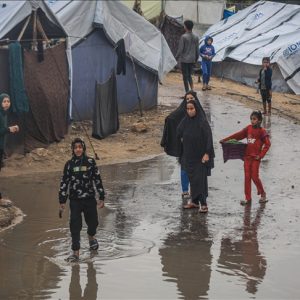
Humanitarian agencies fear the effects will be catastrophic. More than a million Palestinians are displaced across Gaza, many living in makeshift tents, schools, and damaged structures. Most shelters are unheated, overcrowded, and unable to withstand heavy rain.
Gaza City’s mayor said several major roads were already inaccessible by Wednesday afternoon, and early flooding had submerged entire rows of tents.
“People have nowhere to move,” municipal engineers told media outlets, adding that many families are attempting to reinforce their shelters with plastic sheets and blankets as the storm intensifies.
Across Gaza, residents say the combination of military attacks and winter conditions has created a new phase of crisis.
“We survived the bombing, but we may not survive the cold,” said Um Ahmed, displaced from Shujaiya and now sheltering in a school. “The tents leak, the ground is mud, and the children are sick. We feel abandoned.”
West Bank raids intensify
In the occupied West Bank, Israeli forces launched a series of raids late Tuesday and early Wednesday, arresting at least 100 Palestinians in towns and refugee camps across the territory.
Human rights groups say Israel has increased arrests since the Gaza ceasefire began, targeting community leaders, students, and relatives of Hamas members. Many detainees are held under administrative detention, without charge or trial.
As tensions rise, diplomatic efforts continue behind the scenes.
According to a report by the U.K.-based Middle East Eye, Hamas conveyed a significant proposal to Egyptian, Qatari, and Turkish mediators in Cairo last week. A senior Palestinian official familiar with the talks said Hamas offered to freeze all offensive operations for up to a decade and bury its weapons if Israel fully withdrew from Gaza.
The official, speaking anonymously due to the sensitivity of the negotiations, described the proposal as a “serious shift” intended to push the ceasefire talks into a more durable political phase. The offer represents the most far-reaching position Hamas has communicated publicly or privately since the war began.
Despite these signals, Israel has continued military operations with little sign of de-escalation.
Palestinian authorities say Israeli drones and artillery fire struck several locations overnight, including open farmland and areas near shelters where displaced families had recently arrived. Israel has not commented on the latest incidents.
Broader toll
The broader toll of Israel’s war on Gaza remains staggering. Since October 2023, at least 70,366 Palestinians have been killed and more than 171,000 wounded, according to the Health Ministry.
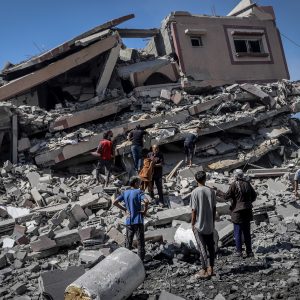
Entire neighbourhoods have been flattened, and basic services — from hospitals to water treatment facilities — barely function.
International pressure on Israel has grown as images of the humanitarian crisis continue to circulate. The UN Secretary-General warned last week that Gaza is already experiencing “a near-complete collapse of civilian life.” Humanitarian convoys remain limited, and aid groups say the ceasefire has not produced the level of access needed to stabilize conditions.
Diplomats involved in the ceasefire talks say the storm may dramatically worsen the situation, adding urgency to calls for Israel to halt all operations and allow unrestricted humanitarian access.
“We were told there is a ceasefire,” said Abu Nidal, a displaced father of four sheltering in Beit Lahia. “But the killing has not stopped. The destruction has not stopped. The storm is coming, and we have nothing left. How much more are we supposed to endure?”
As the ceasefire continues to unravel, the world watches a battered Gaza brace for yet another blow — this time not from bombs, but from the sky.
Second stage includes disarming Hamas, Israeli troop withdrawal, international force deployment, and temporary Palestinian government formation
TEL AVIV, Israel (MNTV) – Israeli Prime Minister Benjamin Netanyahu said that Israel and Hamas are expected to move into the second phase of the ceasefire soon, following the planned return of the last hostage remains held in Gaza.
Speaking alongside German Chancellor Friedrich Merz, Netanyahu said the second stage, which involves disarming Hamas and withdrawing Israeli forces from Gaza, could commence by the end of December.
The ceasefire’s second phase begins with deploying an international force in Gaza, a move seen as controversial in its practicality.
The phase also plans establishing a temporary Palestinian government to manage day-to-day affairs under oversight by a U.S.-led international board.
A senior Hamas official said the group is ready to discuss “freezing or laying down” weapons as part of the agreement, addressing one of the most challenging issues ahead.
Netanyahu acknowledged that while few believed the first phase could be achieved, the second stage will be equally difficult.
In the first phase, however, as agreed by Israel to stop its bombardment, it has continued to strike Gaza, with relentless bombing campaigns, killing hundreds of Palestinians since the ceasefire.
The return of Gvili’s remains, coupled with Israel’s handover of 15 Palestinian bodies, would conclude the first stage of U.S. President Donald Trump’s 20-point ceasefire plan.
Hamas has argued that some remains remain inaccessible, buried under rubble from Israel’s two-year offensive, while Israel has threatened renewed military action or aid restrictions.
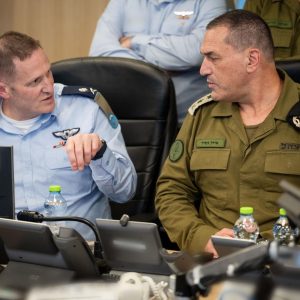
Israeli military Chief of Staff Lt. Gen. Eyal Zamir described the Yellow Line dividing Israeli-controlled areas from the rest of Gaza as a “new border,” serving as a forward defensive line and operational boundary.
Chancellor Merz confirmed Germany’s support for Israel, sending officers and diplomats to a U.S.-controlled center in southern Israel and providing controversial humanitarian aid to Gaza.
He reiterated Germany’s support for a two-state solution, noting recognition of a Palestinian state would only follow successful negotiations.
Netanyahu also noted that concerns over an ICC arrest warrant prevent him from visiting Germany, though Merz said a future invitation remains possible.
Germany’s previous temporary military export ban to Israel was lifted after the ceasefire began on October 10, and no new sanctions are currently planned even though Israel has continuously broken the peace agreement.
Meanwhile, the Israeli military reported killing a Palestinian attempting to cross the Yellow Line. Palestine’s Health Ministry reported over 370 Palestinian deaths since the ceasefire began, with six fatalities in the past 24 hours.
Overall, the Israeli offensive has killed at least 70,360 Palestinians, nearly half of whom were women and children, according to Palestinian and UN-led figures.
Ireland, Spain, Netherlands and Slovenia boycott contest over Gaza war, while BBC and Austria support Israel’s 2026 involvement
LONDON (MNTV) – The BBC has endorsed the European Broadcasting Union’s (EBU) decision to allow Israel to participate in the 2026 Eurovision Song Contest, despite a growing boycott by several European broadcasters.
National broadcasters from Ireland, Spain, the Netherlands, and Slovenia have announced their withdrawal, citing Israel’s ongoing military actions in Gaza, which have resulted in over 70,000 deaths, widespread destruction, and war crimes.
A BBC spokesperson stated, “We support the collective decision made by members of the EBU. This is about enforcing the rules of the EBU and being inclusive.” Israel’s participation in the contest, set to take place in Vienna in May 2026, was confirmed at the EBU’s general assembly in Geneva.
Opposition to the decision has intensified, with critics pointing to what they see as double standards. Russia was banned from Eurovision in 2022 following its invasion of Ukraine, yet Israel faces no such restrictions.
Ireland’s public broadcaster RTE announced it would neither participate nor broadcast the contest, describing Ireland’s involvement as “unconscionable given the humanitarian crisis in Gaza” and condemning attacks on journalists.
Over 220 Palestinian journalists have reportedly been killed since the start of the genocide in Gaza.
Slovenian broadcaster RTV cited the deaths of 20,000 children in Gaza in its decision to withdraw, with chairperson Natalija Gorscak highlighting the ongoing media restrictions and contrasting Israel’s inclusion with Russia’s prior exclusion.
Dutch broadcaster AVROTROS also pulled out, criticizing the EBU for decisions that conflict with essential public values, including humanity and press freedom.
The EBU did not vote directly on Israel’s participation. Member broadcasters instead approved new voting rules to prevent political or governmental influence from affecting contest outcomes.
Austria, as host nation following singer JJ’s win in 2025, and Germany reportedly support Israel’s inclusion in the competition.
Record 20 times more funding for 'hasbara' aims to repaint Israel’s collapsing international image after genocide in Gaza and Israel's continuous regional wars
TEL AVIV, Israel (MNTV) – Israel’s Finance Minister Bezalel Smotrich and Foreign Minister Gideon Saar have approved an estimated $725 million for expansive global advocacy operations — known as hasbara — within the 2026 national budget.
The campaign aims to target audience primarily in Western world which, after Israel's genocide in Gaza and its continuous wars with regional countries, has come to criticize its action in severe terms.
The massive allocation comes as Israel’s global standing, especially in the US and other Western states, has plunged amid the devastation inflicted on Gaza, where the war has left the enclave in ruins and its population facing displacement, disease, acute hunger, and man-made famine.
Under the new plan, the government will deploy hundreds of millions of dollars to worldwide propaganda campaigns designed to advance Israel’s preferred narrative.
More than $300 million has already been authorized, while the Foreign Ministry will receive an additional $150 million for public diplomacy — a sum over twenty times higher than similar budgets in previous years.
According to Israeli officials, the funding will orient large-scale social media operations, partnerships with organizations working for Israelis, and delegations of politicians, public figures, influencers, and other high-profile personalities tasked with pushing pro-Israel messaging abroad.
Israel has increasingly relied on these initiatives since October 7, 2023, attempting to obscure documented evidence of genocide and man-made famine in Gaza by “projecting a sense of normalcy within the besieged enclave,” a narrative widely contradicted by humanitarian groups including the UN, and on-the-ground reporting.
Despite the record investment, observers say the effort is unlikely to succeed, arguing that no amount of money, message control, or PR maneuvering can convince the global public to accept ethnic cleansing, genocide, or other crimes against humanity as acceptable conduct.
U.S. President Trump said the second phase of his Gaza peace initiative will begin soon, insisting that “we have peace in the Middle East”
WASHINGTON, United States (MNTV) – U.S. President Donald Trump said the second phase of his Gaza peace initiative will begin soon, insisting that “we have peace in the Middle East,” despite new Israeli strikes that Palestinian sources say breached the ongoing ceasefire with Hamas.
Trump made the comments after Israeli attacks in southern Gaza reportedly killed multiple Palestinians, a development he acknowledged by saying the operation had “probably killed some people.”
His remarks came during a White House briefing on Wednesday, where he confirmed that “phase two of his Gaza plan is going to happen pretty soon,” though he avoided offering any timetable.
His upbeat assessment contrasted sharply with the reports emerging from Gaza. “It’s going on very well. We have peace in the Middle East. People don’t realize it,” he said, even as casualties from renewed Israeli airstrikes were still being reported.
The strikes followed a warning from Israeli Prime Minister Benjamin Netanyahu, who vowed retaliation after several soldiers were injured in clashes with Palestinian fighters in Rafah.
The juxtaposition underscored the fragile state of the ceasefire and the uncertain future of Washington’s roadmap.
The U.S.-Israeli plan, based on their publicly outlined framework, envisions multiple stages. The first involves a hostage-prisoner exchange between Israel and Hamas, a process marked by sporadic progress.
Later stages focus on rebuilding the devastated Gaza Strip and establishing a post-war administrative structure that excludes Hamas.
The conflict, now stretching back to October 2023, has produced an extraordinary humanitarian emergency.
Palestinian health authorities say more than 70,000 Palestinians—most of them women and children—have been killed, with hundreds of thousands more wounded.
Regional powers are closely watching developments.
Drone attack in central Gaza kills Wadi as journalists warn media workers remain unsafe despite October ceasefire
GAZA CITY, Palestine (MNTV) — Palestinian photojournalist Mohammad Wadi was killed in a fresh Israeli strike in the Gaza Strip, according to local reports.
He died alongside two other individuals after an Israeli drone targeted an area east of the Al-Bureij refugee camp in central Gaza, a zone currently under Israeli military control.
Witnesses said Wadi was documenting conditions on the ground when the drone hit, killing him instantly.
Journalist Mohammed Abdel Fattah Aslih, brother of the late reporter Hassan Aslih who was killed in an Israeli strike on Nasser Hospital’s emergency ward in May, was injured in the same attack.
In two additional incidents, one Palestinian was killed by an Israeli drone in central Khan Younis, and another was fatally shot in the Zeitoun neighborhood on Gaza City’s southeastern edge.
Unverified accounts suggest Wadi had been a well-known wedding photographer from Khan Younis before shifting to conflict reporting after his Quds Studio was destroyed in an earlier Israeli bombardment. He is the second media worker reported killed since the ceasefire announced in October.
The first was journalist and social media figure Saleh Al-Jafarawi, whose frontline reporting made him widely known during the conflict.
He was shot dead in October during clashes between Hamas and an armed group from the Doghmush clan in Gaza City’s Sabra neighborhood.
Journalists across Gaza have been warning online that working conditions remain perilous despite the ceasefire.
Figures from Gaza’s Government Media Office allege Israel carried out at least 591 ceasefire violations between October 10 and November 29 through airstrikes, artillery fire, and targeted shootings. These incidents reportedly killed 356 Palestinians and injured 909.
Amnesty International stated in November that, even after the release of surviving Israeli hostages and the declaration of a ceasefire, Israeli forces were continuing to impose conditions “calculated to bring about [Palestinians’] physical destruction,” asserting that no change in intent had been signaled.
At a UN Media Seminar on Peace in the Middle East held Monday, Secretary-General Antonio Guterres reiterated that civilians and civilian infrastructure cannot be targeted under the laws of war, adding that journalists must be allowed to work freely and safely.
He also criticized the ongoing ban preventing international media access to Gaza.
Summary
2 years ago
US seeks entry of more fuel into Gaza
Popular